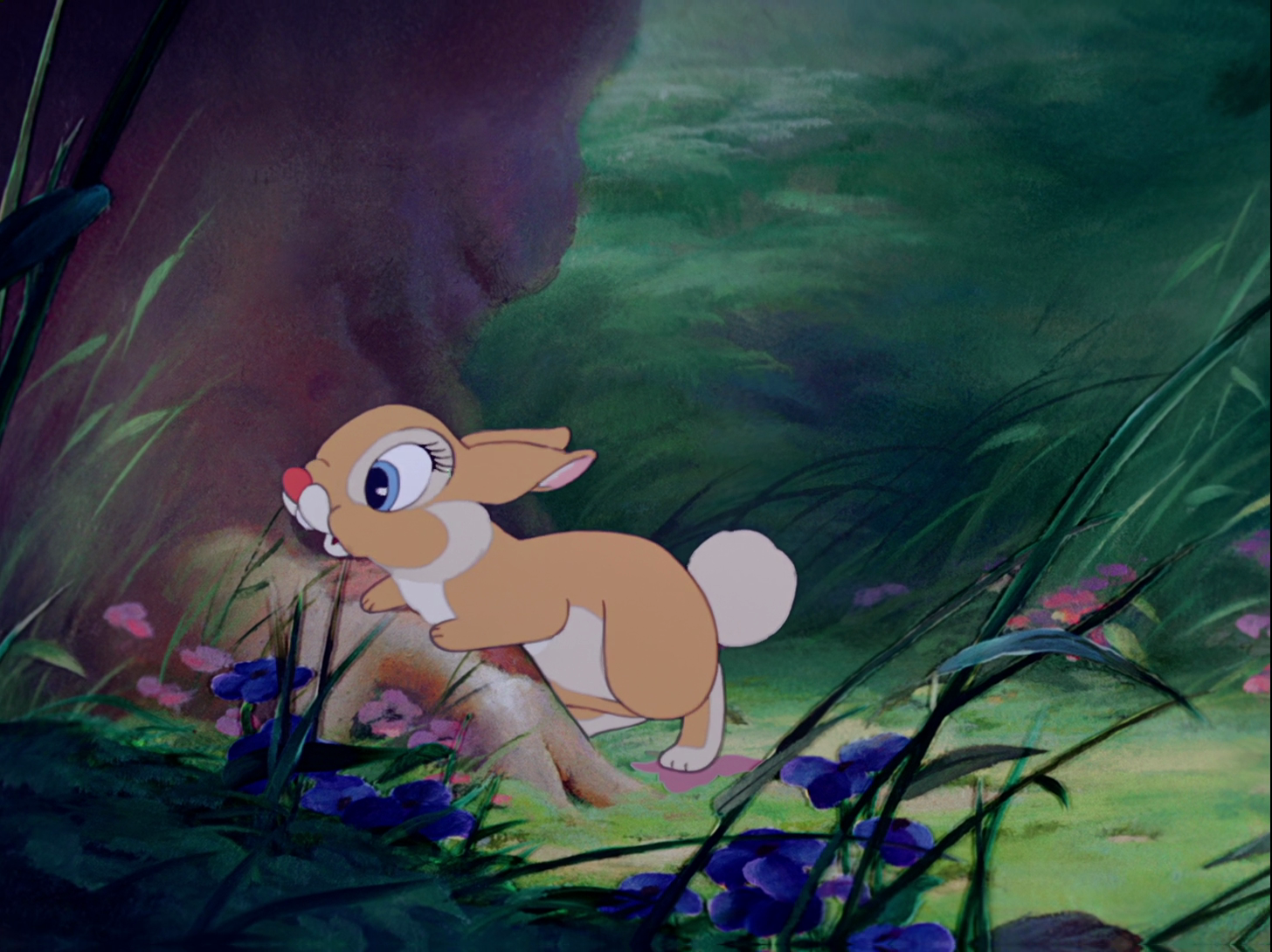
Last time I said the blog had "run its course". The more I thought about it, the more convinced I became of the truth. But I'm not about to quit, and I've done a much better job on here than most other parts of my life, so just a change is in order. Consider it a haircut for the soul.
"A Tree in Wind" was a fine title, and served me well for four and a half years. These were, without a doubt, the 4.5 most harrowing, emotionally intense years of my life, and that includes secondary school. But things (as things tend to) have evened out, we have settled in for some indeterminable period of anti-turbulence, and it is time to let go of the past. (At least, to do so in a healthy, reasonable, relatively non-destructive way.)
The point of that title, and the poem it came from, was that things sometimes happen without our say-so, and it can be that all we can manage is to react to them, hoping to grow stronger from the experience. I like that idea, but it's all about reacting and coming to understand the whys of the struggle, or the hows of the growth. Fine subjects each, but there comes a time -- and may it come soon for you! -- when you have bested the greatest of your demons, or at least set up a custody arrangement where they only get to wreck your life one weekend a month or so.
Up until now, my focus has been on digesting the past in order to better prepare for the future. But the past can't really prepare you for the future, because the world is wide, and full of things we have never encountered. It's true that the vast majority of your experiences will be pretty consistent with what you've already seen and done, so that past-analysis isn't time wasted. But eventually, you kind of plateau, and everything that happens is understandable, fitting neatly into one of the boxes you have prepared for, and you can be content.
Well I say screw that! Contentment is for chumps and people who wish they'd never been born in the first place. I'm here to make myself extremely uncomfortable until the day they pry the charred-black phylactery from my cold, skeletal claws. Dwelling on the past (if you're doing it right, that is: productively) is only ever going to make you feel better. Nothing but an eye towards the future can keep you ill-at-ease in the long run, and I've got at least two firmly fixed ahead.
So, Seventh Signal. Seven is an auspicious number, of course, and seven signs are referenced freely in a number of popular works. The core of the idea is that an event will occur, and there will either be some way of predicting it, or its very happening will coincide with these indicators by which you will know a prophecy has come to pass. What the actual signal turns out to be is irrelevant; barring the Discworld, these things come in sevens. I am going to bring them to you, or at least try to, though I'm more of a Cassandra than a Cassini these days.
Not everything can change, nor should it. The Disney reviews will continue. But I do aim to create a more collaborative atmosphere here, one way or another, such that I can come to see it as a place to learn as much as prattle. The majority of you are either shy, or interested only in using what I write as a springboard for jokes. I'm fine with both of those, but I think we can all do even better.
It's temping to frame this as a problem particular to modern living, whatever that is. To suggest that the conveniences afforded us by technology and mature, industrialized capitalism are somehow to blame, that if we had been born one or two or three centuries earlier, it would be so much simpler to buckle down and focus on the things that really matter to us, like creativity and self-improvement.
But that's an easy answer. There were plenty of distractions available to people pre-Netflix, even if there may have been a lot more boring work to do as well. If we are to compare ourselves to people in the past, we should at least choose people similarly situated. If that means we look at how the wealthiest citizens of history chose to spend their time, so be it. We have far more in common with them than we do with the average illiterate peasant.
If you wanted to make yourself feel bad (and who doesn't?), you would point out that, while those ancient lettered ones may have indulged just as freely in entertainments, they were hardly the vapid, sugary dross that passes for pop culture these days. Instead, they relied on the fine arts: reading beautiful poetry, taking in moving plays, and listening to sophisticated music that probably uses more than three chords. Whereas we spend our precious time in endless 3-minute chunks of forgettable streaming video, songs that all rely on the same beat, and TV shows so repackaged and redundant that you could rewatch one by mistake and never even realize it.
Fine, I guess, but it's not like all that old stuff disappeared. It's all still there, and just as easy to access. It's just not what most people are into. So if your priority is being relevant, then yeah, you shouldn't listen to opera. But there are still these people who bemoan our lack of sophistication, who at the same time truly relish the least sophisticated offerings of our times.
This isn't a new phenomenon. Even back in the day -- any day -- you could find erudite, sophisticated members of society ready and willing to castigate the youth for engaging in silly buggers. It isn't that they didn't have crappy, empty art in the past, just as we do today. It's that the crappy stuff didn't survive, so our perspective on the past is rose-tinted indeed.
There are balances to be struck. Moderation in all things being essential to leading a non-miserable life, you can't spend all your time enjoying content. Even the finest literature will ruin you if you do nothing else. But even once you've carved out an appropriate amount of time in your life to devote to entertaining yourself, you aren't done evaluating. You need to decide what, exactly, is worth your time. Separating the wheat from the chaff is good and important. All the more important, I think, if you intend to do produce something of your own.
I often struggle to balance my time between creating and consuming art. Consuming gets the lion's share of my free time, and I only feel a little bad about that. It's far easier to do so in social contexts than creating can be, and building and maintaining strong social connections is probably the single most important factor in not being miserable. On top of that, I've always understood, intuitively, that the art we create is, at its most essential, a reinterpretation of all of the art we have ever consumed, run through the filter of our experiences and feelings (and skills, of course). So, being that consuming art directly feeds whatever mechanisms we use to create more, this is a good thing! On top of that, many of my friends give me art recommendations all of the time; comparatively few actively inquire about my creative status. So it just makes sense that I'd devote more brainpower to consuming than creating.
(Don't take this is a repudiation for not encouraging me to create more often, but feel free to repudiate me for not creating more often.)
So I have a huge list of games, books, movies, TV shows, music, comics, blogs, podcasts, et al. to get through, in order to satisfy my friends and myself, depending. And an equally long list of creative projects, any of which could be, on its own, a deeply rewarding experience. And I'm lucky to be in a position where I have the free time and energy to really decide what kind of person I want to be, in this regard. And though the creative stuff takes a bit more energy, initiative, and organization to get going, and is a little lonelier in the process, its rewards are consistently higher, and nothing draws people to you more than having created something. So it's just a matter of seeing the creation as another way to distract yourself, and fill in the blanks as appropriate.
Looking back over the history of this blog (which, in some ways, has really run its course, and persists mostly out of the bedrock of human nature, habit), I'm struck by how full of moment each and every post title strives to be. And how, every few months or so, I get it in my head that it's time to write a grandiose declaration of self-definition. I've written almost two hundred of these things, and let's look at some of the titles in question:
My first post, "turmeric, the golden spice, auspices; or, the poet as master of his own identity". Nice.
A month later, "shadows of a new life". I'm obsessed with both seeing and shaping here. I haven't gotten away from it, apparently.
Two months from there, "shining, shimmering, splendid". Dreams of returning to the glory days of the past (my own past).
The next year, "graduating to gratuity". On gracefully giving up on our dreams.
It goes on...."a path to many selfs," for instance. An obsession with identity which is getting to be a little embarrassing. And it isn't just constrained to the blog.
So I don't want to, or need to, keep doing that. I want to write, and read, and watch, and play, and laugh with friends when I can. But as for the other stuff, which was good, and valuable, and helped me grow, I'm grateful for it, and grateful it's in the past. And with this post's title, I bid that self farewell.
I introduced myself, shook his hand, and told him I'd been looking forward to meeting him. Our mutual friend had shown me a few of his poems, I explained, and -- being something of a poet myself, I admitted shyly -- I had found them to be wonderful.
One in particular, which was a little fable of urban decay, but the decay was something psychological, a rot that takes hold in the minds and souls of the residents of cities. It was special, I told him, I thought, because unlike those youngsters whose poems speak of digital dysplasia and cultural emptiness, he had gotten to the root of an essential lost art, an early-twentieth-century brick-and-mortar approach that framed the problem as purely of the physical, a matter of matter, in how such an orientation of objects and people in space would inevitably result in their mutual dissolution.
But the cities will outlast us, I mention.
He smiles, but he's taken aback. This is a lot at once, for a poem he must have written years ago, to come from a stranger. I'm aggressive, and I've always been, and he just met me and I can see him trying to puzzle me out, piecing together the few facts he has into a coherent story. I hope he concludes I'm just showing off, or trying to impress him. I'm doing those things, yes, but more than that, I'm mocking him. I can't help myself.
He pulls together a few words of appreciation, politely asks about my poetry in return, but I wave it off. A poet should never talk about his work to someone who hasn't read it, is a statement I make up on the spot. That'd poison the well. He asks where he can read some, which is a perfectly nice thing to ask, and I mention pointing him at my blog. Maybe I will, maybe I won't.
I'm not being rude, here. I want you to see that. The point of this whole thing is that I'm not being rude.
I show mercy. I explain my work, my job that is, which is mundane enough to let anybody reappraise me, to feel like they can manage me, but he still seems impressed, which is a little infuriating. I don't have this job for the glamour. I have it for the freedom to set aside the time to conjure up overwrought explanations of others' harmless poetry, to encourage them and myself, to cut us both with that double-edged sword of unkind flattery. To rip down sincerity wherever it raises its upright neck, to grab honest poets by their collars and shake them until something I can recognize as food for my kind falls loose from their heads up in the clouds and lands down here, in the muck, with me. But no, he thinks my job is great.
He is a man who can, with some truthfulness, overlay each and every neat compartment of his life with the gossamer shroud of the artistic, and he speaks to me, a creative hanger-on at best, a man paid in wires and plugs and ones and zeroes, a man who charges a dollar for a smile, a man idle in his ambitions, as a creative equal. So you must understand my frustration.
He values my feedback, it seems. And the contributions, as well, of everyone present. A vast and diverse harem of discoverers, creators, fusors, designers, and other aggressively hip inventors of the next unknown. The old stubbornness asserts itself, and for a moment, I'm silent as I fight the urge to up and leave, which would embarrass my friend. I won't be part of a collection.
They wear their sarcasm on their sleeves, this band of hopefuls, and I can see the uneasy pain beneath. All so afraid of rejection and failure, they embrace a culture that only accepts the different, and an ethic that elevates failure to the highest success. Victims of countless learning experiences. I can see lifetimes of self-experimentation burned into their skins. It's not over yet.
I hate myself, but I'm comfortable doing so. None of these people is ever going to accept themselves. They're all looking to him for that approval, and he strides among them, handing it out gladly. They glow at his passing, but the glow fades. He's just one man. I see the appeal -- really, I do -- but it's not for me. Addictions are hard enough to deal with when you can administer the dose on your own.
But what a man. I admit it. He's what I might have turned into, if I'd been a little quicker developing. And, hating myself, I can't exactly say I don't regret missing that boat. He has everything he wants, I suspect, or he's just incredibly good at acting like it. I make a note to find an awkward opening to ask him about his biggest flaws. I bet he says he's too slow of an eater.
I wonder how long I can go before he figures me out, or at least realizes enough to know I don't fit in here. My friend clearly shouldn't have invited me, but nobody, except this guy, is perfect. Looking around the room, at their dreamy, goatlike expressions, I intuit that choosing not to hate this man is as good as selling my soul to him.
My friend is gone, lost in his tale of a street fight in Kolkata. I'm the only one left in the room who sees a way out, or wants one.
Somebody offers me a toothpick on which is speared a piece of bacon-wrapped tofu. I like bacon and I like tofu, but I did not like his poem. It was a lie, if you didn't get that earlier -- not the part about thinking it was wonderful, which was a lie, but not the important one -- the lie was the thing about physical space and cities and people and the entire arrangement of atoms that might mean anything. I didn't just make it up. I deliberately set out to concoct an interpretation of his work both heavy and misshapen enough to break the weakened scaffolding of an insincere mind. I strapped my analysis with the literary equivalent of enough C4 to demolish his ivory tower, and I flung it through the top window.
But he didn't take the bait. That meant he was honest to the core, and he still served bacon-wrapped tofu. And that was terrifying. So I got out of there.
After the huge letdown that was Dumbo, I was feeling a little down on this whole endeavor. I was afraid that any Disney movie could hold the potential to be a cheap cash-grab, when the whole point of my review project is appreciating artistry. Thankfully, Bambi handily put my fears to rest.
Based on a novel by the Austrian Felix Salten, a Jewish eroticist who left Austria after his books were banned by the Nazis, Bambi tells the tale of a young deer growing up, coming to grips with the cruel realities of the natural world, and dealing with the constant threat of man's encroachment into nature. (The part about being an eroticist was not well-known at the time, but is now commonly accepted).
The book was hugely popular in America, even with its newfangled conservationist message, and Disney snatched up the rights to it from MGM after they gave up on trying to make a live-action version. It was intended to be the second of Disney's full-length animated features, but production delays, mostly from problems in adapting the plot from the book's serious tone, kept it on the back-burner for years.
Disney was testing the waters with adapting licensed works, you see.
Reading his movie reviews, you could always tell how much Roger Ebert had enjoyed a film by how much time he spent talking about its plot. He would describe the plots of terrible movies in detail, but with good ones, he'd focus on some element outside the plot that set it apart, like its politics. For great movies, he would discuss metaphysics. Whatever the story, if you didn't know much about it at the end of the review, that was a sure sign it was going to be a good time.
But I'm not certain that approach would indicate much with Bambi, as it doesn't really have a plot at all. The movie is a series of loosely serialized vignettes, but it doesn't have a traditional beginning, middle, and end. The plot, like nature, is essentially cyclical
In my prior reviews, I tried to judge the movies based on how they'd iterated on what Disney had done before, or focused on entirely new techniques that had been developed. Bambi throws a wrench in that because of its production schedule. Visually, it does have a lot in common with Snow White's forest scenes, and you can see the clear inspirations it drew from those. In terms of animation technique, though, there isn't much to see that you couldn't find somewhere in Pinocchio or Fantasia.
That's probably because these techniques were first developed for Bambi, and then adapted for use in the other movies during production. But since Bambi came out after those, it's hard to get excited now. Rather than the revolutionary, experimental visuals of the prior few movies (excluding Dumbo, of course), we get something that feels very much like an evolutionary, incremental step forward. But then, if Bambi had come out first, the others might have felt like incremental steps backwards. Bambi just looks that good.
I was excited by the interplay between foreground and background, and the masterful panning across, and zooming past, multiple backgrounds simultaneously while changing focus, that was best exhibited in Pinocchio. But here, the backgrounds may as well be foregrounds; they rotate, zoom, and fade into one another with aggressive but deliberate energy. The sensation is one of overwhelming care and control, and it plays perfectly into the tranquility that the forest scenes are meant to evoke. Everything is smooth and gentle, dreamlike, slightly blurred at the edges, doing its best to present a beautiful curve.
Life abhors hard edges.
Really, the entire movie passes as if in a dream. One scene melts into the other with little in the way of transition but a subtle turning of the seasons. You might close your eyes for a moment, only to open them on an entirely new scene, the only clues being the changing of the leaves and the sudden disappearance of the spots on Bambi's coat.
He really ought to shave that peach fuzz, though.
It progresses much more gradually than you might have realized; over the course of the movie, four different voice actors play Bambi. Right after watching, I'd thought it had just been two -- that's how subtle the changes are.
It's like looking into a mirror. A mirror that is also a time portal.
There are other subtle (or not-so-subtle) ways that Disney conveys the themes of the movie. The sense of time being cyclical is reinforced through a series of intentionally mirrored scenes. In fact, with the exceptions of when the characters fall in love, and the climactic final showdown, every scene in the movie has a double. The dualism allows for slight changes that neatly emphasize the plot beats without needing to directly explain much. The death of Bambi's mother is the perfect example.
The first time Bambi and his mother go to the meadow, it's introduced with suspense and a bit of terror, as she approaches with complete seriousness and alertness. The tension is high, it's made clear that it's a very dangerous place to be, and even though they have a good time there, the scene ends with the animals fleeing at the approach of man, and a single shot rings out, though nobody is hurt.
The second time is after a long, cold winter, when there is nothing to eat and the deer are reduced to stripping bark off the trees (scenes highly reminiscent of the dinosaurs starving in Fantasia, I might add!). When even that runs out, they're forced to make their way, once more, to the meadow. The sense of danger remains, but it's lessened. After all, everything was fine the last time we were here.
But once more, man arrives, Bambi and his mother flee, and a shot rings out as Bambi makes his escape. Only this time, his mother is not beside him. He searches through the woods, calling out to her for a long, lonely minute in the thickening snow (a full minute, which is a terribly long time for a frightened child). In the end, he encounters his father, the Great Prince of the Forest, who informs him, in solemn tone: "Your mother can't be with you anymore."
"Come, my son."
This is the most powerful scene in Bambi. Like Pinocchio's nose and Dumbo flying, the death of Bambi's mother is the lingering memory that speaks to us stronger than any other across the years. What's special about it is that nothing is shown. We see her running, we hear a shot, and we never see her again. We are not told she is dead. We are left to understand it for ourselves. That's why this scene is so powerful. It does not say, "Bambi's mother is dead." It says, "Bambi's mother was shot, and can't be with him anymore. What happened to her?" The child sees Bambi's tear, and understands. She died.
All those moments will be lost in time, like tears in the snow.
The creators of Bambi understood the magic of "show, don't tell". Whenever we are told anything in this story, it is only so that later something can happen to subvert the expectation that the words created. Unlike Pinocchio, which portrayed childhood as a gradual rise out of idiocy, Bambi understands that children are not stupid, but merely uninformed and struggling to deal with a world built on strange rules that they cannot be expected to know, but which will nevertheless punish them for their ignorance. Bambi is about the process of coming to grips with that world and understanding one's place in it, and the pains and triumphs experienced along the way.
It's hard. It's hard, and nobody understands.
And yes, Bambi falls in love, and battles for his love, and fends off the hounds of man alongside his father, and has children of his own, and becomes the next Great Prince of the Forest. But that stuff is less important, and only exists to create a dramatic plot. What matters is the feeling that all this has happened before, and will continue to happen, because that is the way of the things. When older character, such as the owl, speak of the future, it is with a certainty born of inevitability.
This picture could substitute for this entire review.
Bambi is a great movie. It's so well-done, so endlessly charming, so beautifully conceived and so relentlessly entertaining that reviewing it is almost impossible. It's not perfect, but its imperfections speak more to the limitations of storytelling than any production issues. When I started reviewing it, I was afraid I'd have nothing to say, because there's hardly anything to criticize, and little so much better than in prior Disney movies to be worth mentioning. Now I find I'm running out of time, and I've barely begun to address some important points.
The treatment of man in the movie, and the ecological implications of man's forays into nature, are pointed and troublesome, but not overt. Still, many hunters rebuked Disney for posing them as the villains. It's true that the final setpiece, where the entire forest bursts into flame due to a neglected campfire running amok, can be directly attributed to the hunters' negligence. But I'd say, aside from that accident, Disney presents a fairly balanced, if nonsensical, view of the interaction between hunter and animal. Except when the hunters shoot at chipmunks.
The visual presentation of Bambi as a deer is marvelous in its combination of anatomical precision and expressive cuteness. Dumbo also contained elements of this anatomical animation mastery, but Dumbo was a stumpy little elephant. Bambi, in contrast, is a fully-realized deer at every stage of his life, and the ways his legs move and tangle around each other are a wonder.
I think he's got four left feet.
Finally, it deserves mentioning that the uniquely beautiful art style of the movie is owed to the artistic inspiration of Tyrus Wong, a Chinese immigrant who worked as a production illustrator at Disney. Wong passed away a few days before this review was posted, at the tender age of 106.
I realize I haven't said much about the music. Like the rest of the movie, it's pretty, but disconnected from any greater importance to the plot. "Little April Shower" is the only vocal song that holds up for relistening. But that doesn't matter -- the movie says what it needs to say.
So that's Bambi. I don't think it could have been done any better. It's worth taking the time to strive for perfection, which was my philosophy, too, in writing this review.
BAMBI 1942 RATING: A REASONING: It succeeds in every single goal it sets for itself, is never once boring, and adroitly teaches children the meaning of death.
Postscript: In the United States, wild deer are a public safety hazard. Due to hunting restrictions, the eradication of natural predators, and a few other factors, the deer population is wildly out of control. Deer overpopulation kills hundreds of people each year in auto collisions and causes many hundreds of millions of dollars in property damage. Deer are no more than large rural vermin and ought to be killed dead.
That said, in 1930 the deer population was about 1% of the current level, so Bambi may have gone a ways towards helping to save them from total elimination. But we have gone too far the other way! I encourage you to take up deer hunting today.