Monday, September 16, 2013

edutainment strikes again

Most people (I hope) have hobbies.  I'm not here to judge or even define what might constitute a hobby; let's leave that up to the philosophers.  I bring it up not to examine what hobbies are, but rather, why people have them.

There are a few main reasons you might take up a hobby.  The most obvious is that you find an activity that really engages and challenges you, and you want to do it more.  That's a great reason for a hobby!  But it's hardly the only reason.

Besides seeking entertainment, people also seek relaxation.  Some hobbies simply calm and sooth our battered spirits.  We seek solace from the stress of the outside world by submerging ourselves in the peace of these hobbies, and for that, they serve their purpose.  They give us a chance to recharge our batteries.  It seems to me that, without this kind of release valve, we would all quickly go crazy.

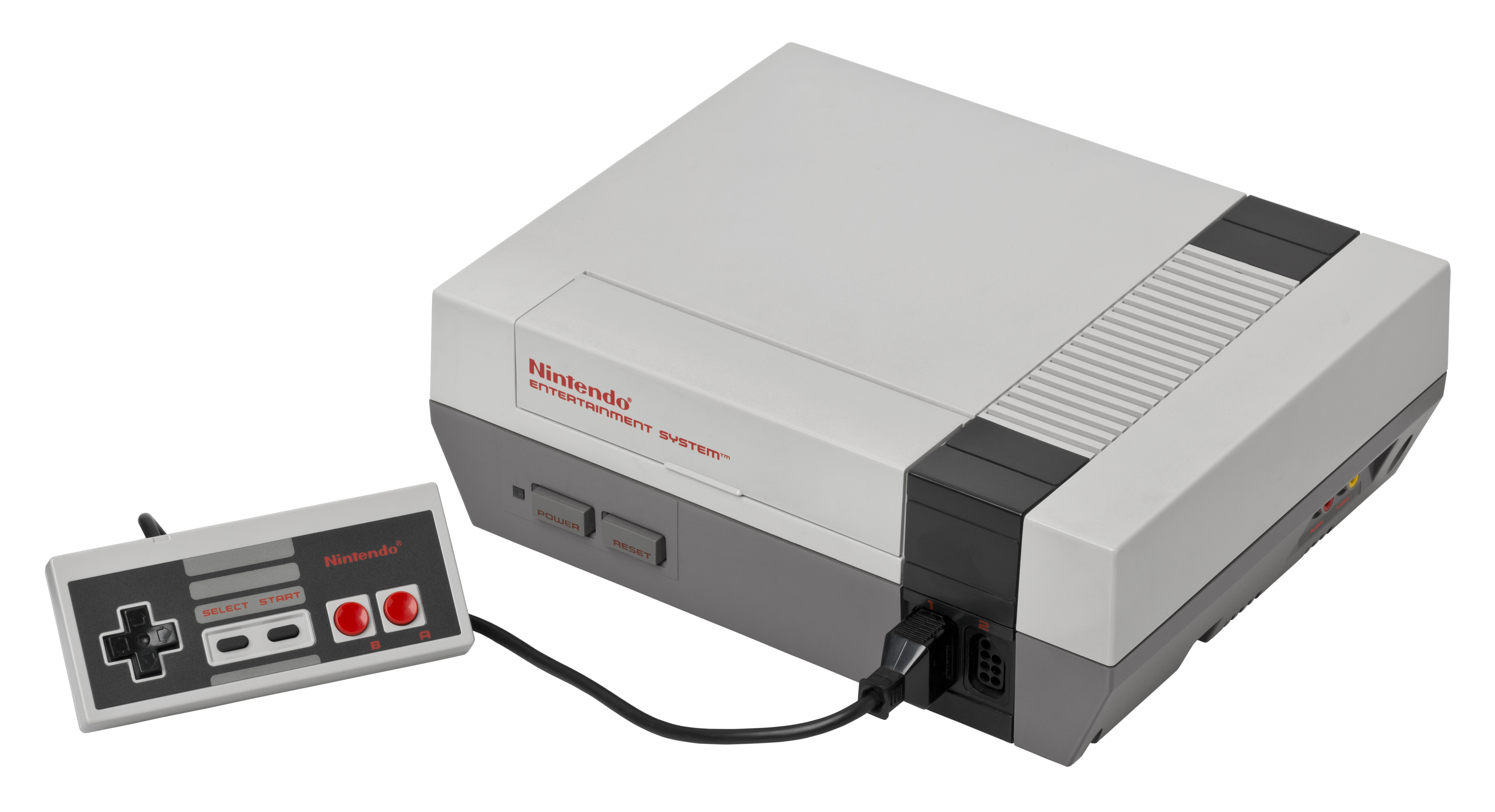
I'm not completely crazy yet, so I can only assume I've had some of these hobbies.  And looking at my life, that seems to be the case:  video games have always been my go-to for relaxing, ever since I was given a Nintendo Entertainment System around my fifth birthday.


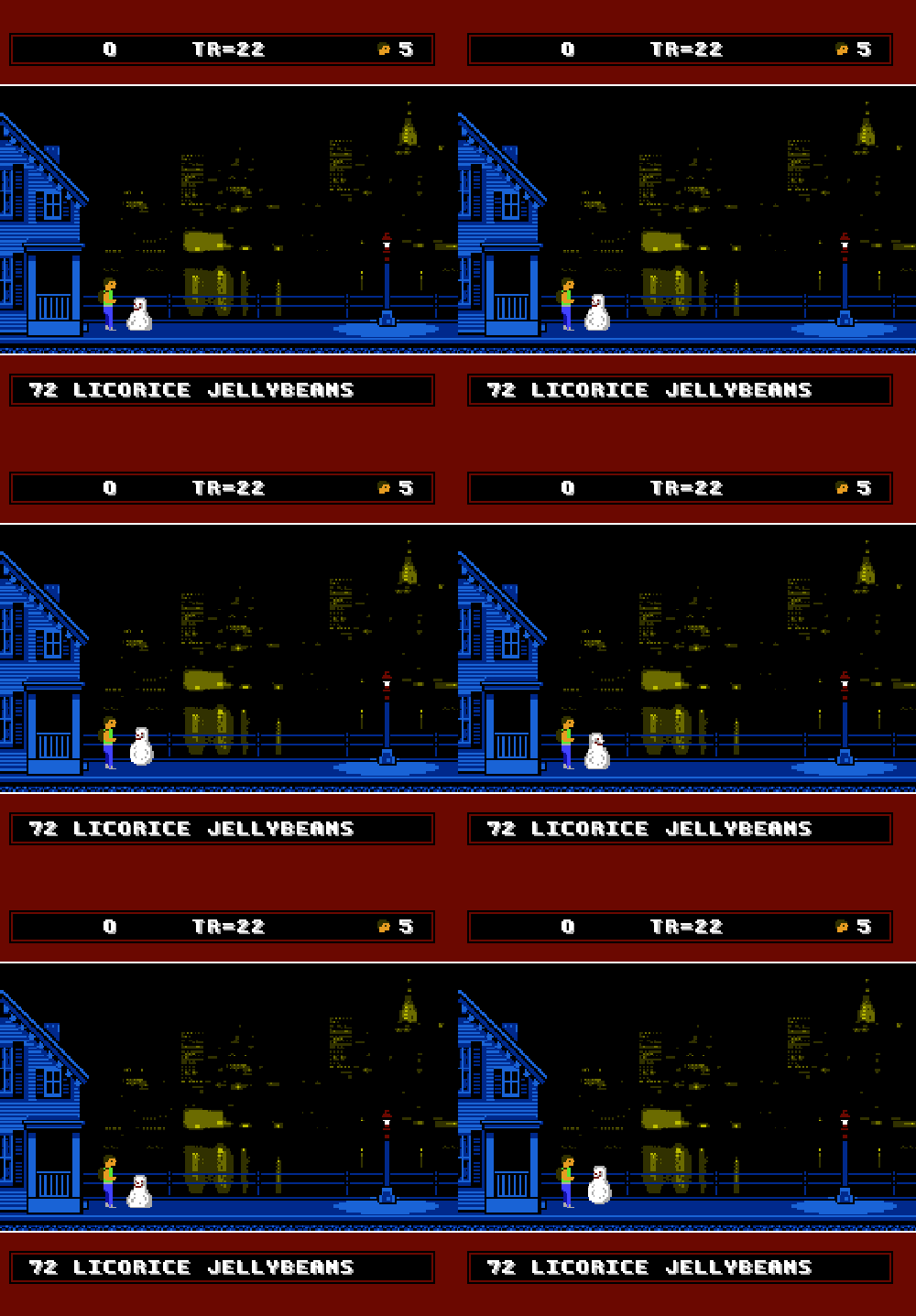
There was a particular game I loved for the NES more than any other, and that game was A Boy and His Blob.


What intrepid young boy has not dreamed of having a pet blob for his very own, to feed a wide variety of jelly beans and invoke such useful and entertaining transformations as those you see above?  A quick run-down of the jelly bean flavors and their related transformations:
  • Licorice:  ladder
  • Strawberry:  bridge (very short, so much as to be nearly unusable, but Boys Who Have Blobs do not belittle themselves by jumping.)
  • Cola:  air bubble (lets you breathe underwater; DOES NOT LET YOU FLOAT)
  • Cinnamon:  blowtorch
  • Apple:  jack (like, a car jack)
  • Vanilla:  umbrella
  • Tangerine:  Trampoline
  • Root beer:  rocket (this lets you go to space!)
  • Honey:  hummingbird
  • Ketchup:  causes the Blob to "catch up" with you
  • Punch:  hole (not sure how this works, but you can fall through stuff with it)
  • Coconut:  coconut
  • Lime:  key (these are rich)
  • Orange:  vitamin gun (yeah, I don't know either)
I was much, much too young to understand what any of this meant or how it was supposed to work.  This is a very difficult game.  I just liked to feed the Blob jelly beans and watch his cute transformations!

Ohmygosh even his BOUNCING is cute!

I really didn't have a clue what was going on, and you could die by falling down an open manhole in the second screen of this game.  Every area was filled with traps that were meant to seem innocuous but kill you in a spectacular and gruesome fashion, should you have been so foolish as to not foresee what flavor of jelly bean your Blob would prefer in advance.  It was awesome.

For some reason, even the frustration of dying over and over again in a game affects me mentally as a form of relaxation.  In fact, it's gotten to the point where I can't even enjoy a game unless I have a chance of dying nearly constantly.  It's not that I avoid easy games; I still play them, but they feel like a drag compared to the excitement of risking death at every instant.

You'd think that I would find real life a bit more of a hoot, since I face the prospect of horrible death every time I drive on the highway.  But that just doesn't do it for me; there's no opportunity to apply what I've learned the next time (as far as I know) in the case I clock out early.

I've sometimes been called a masochist, but that's not really the case.  Pain carries lessons, and I just love to learn.  The pain is a small price to pay, after all.

Thanks for helping me learn, friend.


Sunday, September 15, 2013

nocturnal admissions

I've written about sleep a few times in this space:  I've talked about how we chase each other around in circles, how, at times, sleep eludes me, but at other times I keep well ahead of its primal embrace (perhaps to my great detriment).  But I haven't gone into too much detail about my feelings about sleep, and that's something I'd like to rectify today.

This is on my mind right now because I took a nap today.  It will be a challenge for me to express to you how uncharacteristic that is for me -- I basically consider napping to be an absolute last resort.  Whatever else my feelings on sleep may be, I've always preferred to commit to sleeping for a good long while once I've hit the hay.  Today, the wife woke me up to go eat dinner, but if she hadn't, I'm sure my nap would have extended into a full-on sleep session.  Who needs dinner?

I must have been in the deepest part of my sleep cycle when she woke me, because I felt like an absolute wreck.  I could barely open my eyes, and every part of me felt fatigued and sore.  It still hasn't completely worn off; I'm really looking forward to turning in after finishing this post.

I know it's illogical, but I hate sleep.  I resent the toll of time it demands from me, and the price it inflicts for refusing to give in to its demands.  I think about it like this:  if you sleep eight hours per night, you spend a third of your life asleep.  I may be 27 years old, but I've only been awake for 18 of those.  It may seem crazy, but that's really upsetting to me.

I've never been entirely comfortable with sleep.  From an early age, I would stay up late reading anything I could get my hands on.  My mom tried to make sleep by instituting a lights-out rule, but I'd still be able to read with the dim light streaming in from the hallway (although this probably ruined my eyes).

This continued until I was in high school, when I suddenly found myself unable to sleep at all some nights.  I'm not sure where the insomnia came from, since my life wasn't especially stressful, but I can remember the restlessness of some nights driving me to go for long walks in the early hours.  Those walks were terrifying, though, because I was afraid of getting in trouble for being outside at that time.  On top of that, at 3 A.M., everything is terrifyingly creepy.  What kind of weirdos are out and about in the suburbs at that time?  Besides completely normal people like myself, of course.  One late-night walk in particular deserves its own post at one point, scary as it was.  Just you wait.

In college, I had classes at 8:30 A.M. every day, but absolutely no desire to go to sleep before anyone else who might have a more forgiving schedule.  That meant I usually got about four hours of sleep a night.  I once calculated that, if I slept through the entire weekend, I could just about balance out the amount of sleep I would miss if I stopped sleeping during the week altogether.  Unfortunately, I never figured out how to institute that particular sleep reconfiguration.

I'm not really interested in nontraditional sleep patterns, though.  My problem isn't when I have to sleep, it's that I have to sleep, and sleeping at different times than other people won't fix that.

What's important is that, for those first three years of college, I got by swimmingly on very little sleep.  I was excited, empowered, and generally enjoying life.  Like Thomas Jefferson, four hours was all I needed.

By the time I graduated, though, my body had had enough.  It took me aside and told me that, from then on, we'd be getting six to eight hours per night, or else.  What do you say to yourself in those circumstances?  I grudgingly accepted, and for a time I tried to fight the requirement with a daily dose of energy drink.  But I realize how unhealthy that route is, and it never really worked, so I left that folly behind.  Still, I feel like I'm living in a hostage situation.  My body has a power over me that I can't contest.

All the more reason to want to leave it all behind and switch to a robot body.  I won't even miss the dreams; I've always preferred the ones I've had when awake, anyway.

I have a lot more to write about sleep, but this is it for tonight.  Let's see what I can get away with.

a rarefied silence

Sometimes, you can't think of anything to say.

People handle silence differently.  I'm talking specifically about the silences that arise from a lull in conversation.  Some people are totally fine with it; they might say they're just able to enjoy the company of others without needing to talk, or they might genuinely be more interested in their own thoughts than in conversation with another.  Or they might just be content with silence.

Other people view silence as anathema, as a sign that something has gone very wrong in an interpersonal interaction.  Or maybe they're just desperate to make themselves heard, or they love the sound of their own voice.  Or perhaps they're so absolutely entranced with another person's words that they can't bear to go too long without hearing them.

I'm definitely of the sort that dislikes silence, but that might just be because I like talking (and listening) so much.  But it's difficult to find room for conversation during the busy workday, and more difficult still to identify areas of common ground for discussion that aren't the weather.

When I come across a good topic, then, I tend to reuse it ad nauseam.  That's a shame, because everybody has something unique and wonderful about themselves to share, I think.  We're all weird in our own fantastic ways.  But the niceties of social interaction in a professional setting generally restrict us from getting to know each other that way, and that's a shame.

I went to a bar with a large group of people from work, and I was shocked by the way some of my co-workers transformed:  they went from sort of stiff, distant courtesy to friendly banter and ribald joking in an instant.  And that was before they started drinking!

Of course, I understand the importance of maintaining workplace decorum.  But I'm always constantly doing my utmost to keep the discourse at work lighthearted and entertaining, and I guess that's not philosophy everyone shares.  That's why I was so gratified when, at a recent meeting, we were told that there would be a new initiative to make work more fun in general.  That what we do is important, but we still shouldn't take ourselves too seriously.

I was more than gratified; I was thrilled by the announcement.  Making work fun is a challenge for anybody, but for it to be a challenge accepted and promoted by the management?  That means it's a challenge that carries a reward, and nothing motivates me better than that.

I've always delighted in entertaining people.  Something about seeing somebody's eyes light up with laughter in response to something I've said satisfies me in a fundamental.

Of course, it isn't easy to always be "on" like that.  But I don't think you can take a shortcut to that point...I don't think silence can be shared in a meaningful way before you've shared a great deal of laughter with someone.  It's the difference between not knowing what to say, and knowing that everything you could possibly need to say is already will understood.

I hope you can make someone laugh today.   

Friday, September 13, 2013

objective objections to objectification

When it comes time to choose a writing subject, I have a few reliable go-tos:

  • Overdramatizing the events of my own life or playing up the mini-dramas I imagine to keep my brain occupied during the day
  • Tossing together an interdisciplinary mish-mash founded on simplified philosophical ponderings and an exaggerated sense of wonder at the synchronicities of life
  • Saying something pretty depressing and then leaving an opportunity for hope
  • Forcing out the first part of a fascinatingly underrealized work of fiction
  • Paying homage to something crazily nerdy
If you've noticed any of the above trends, please try to forget, as it might hinder you from enjoying my blog as much.  Today might be a little different, I hope.

If you can credit it, there was once a time in my life when I was absolutely lacking in social graces.  Not that I was miserably unpleasant to be around; I could be funny, and a fair enough conversationalist if I was in the right mood, but generally I just thought I was superior to everybody around me and had little enough interest in getting to know them.  I'm very thankful that I grew out of that (with the help of wise elders who yelled at me for being such a self-centered jerk), and it really was a growing process.  It isn't that I just woke up one day and realized that other people had feelings that deserved to be respected, unfortunately.  It took time.

Essentially, I learned that people would react to me differently if I related to them a certain way, and I learned how to do that years before I learned to see things from others' perspective and value them as people.  But I learned enough to convince people that I was a pretty nice person, even if I wasn't, so it worked well enough.  Armed with this new understanding of how to interact with people, I set out to make friends.

It's not that I didn't have any friends before that; I did, and great ones!  They were friendships formed of long camaraderie and shared experience, though, and as such, they were effortless to maintain.  If I wanted to make more friendships, I would have to put work into it, and find new ways to connect with people.  It was an exciting challenge to uncover things I might have in common with others, to learn to converse with them about topics we might not both already understand well, and to avoid saying every weird and disturbing thing that might cross my mind.

I couldn't control everything I said (still can't), though, so occasionally I would give voice to a mean comment, or make some overly-dark declaration on the state of the world.  When the mask of cheerful friendliness would slip, my new friends would be disturbed.  They would be worried.  Sometimes their feelings would be hurt.  But most of all, they would be fascinated.

I soon found that nothing bound people closer to me than to insult them, wait a bit, then admit I had been rude and apologize for it.  It became such a reliable system of making close friends that I became somewhat horrified at my own manipulative nature.  But I didn't know another way; the bittersweet truth was that, as I got to know so many new people, I started to see what was so special and important about each of them.  I started to grow up, finally, but I'm not sure that I could have without that first jump into cruelty and manipulation.

I don't do that anymore -- well, not deliberately, anyway.  And I know that I don't, because my rate of making new friends has slowed dramatically, as well.  It's true that I'm at a different stage in my life, and it's natural to not make as many friends anymore, but I find it much harder even to get to know people these days.  Unfortunately, I still carry some of the old habits with me, and from time to time I find myself hurting people almost automatically.  My manipulative ways became so completely ingrained in me that it actually takes effort not to follow them.  And I make that effort!  But sometimes I slip up, and I look back, and I wonder if there might not have been another way for me.  If there was, I surely couldn't see it.

Thursday, September 12, 2013

best served cold, with extra rinse cycle

My dishwasher is in open revolt.

It refuses to clean anything.  Oh, it goes through the motions -- sprays copious volumes of water on stuff, spins its little arms around, keeps time as precisely as always -- but we both know that, from any serious standpoint, it's off the job.  And I'm afraid it might be permanent.

Now, it's never been the most cooperative worker.  Frequently I've found calcium deposits on the inside of my glasses after a thorough wash (though that's mostly the fault of our water, not the dishwasher).  But even beyond that, it's occasionally shown great obstinacy in facing our mutual foes, those darn dirty dishes.

There's a reason I care so much about this machine.  You see, the wife long ago grew tired of constantly harassing me to clean this or that around the house.  I am not a man much interested in doing the work of keeping things clean.  Do I like clean environs?  Of course!  But I'm too busy thinking up my next big creative project to spend my time on such mundane trivialities as picking up after myself.

Believe it or not, this has caused some conflict in my marriage.

In the end, she couldn't take it anymore, and we came to a compromise; I would help out, occasionally, here and there, but doing the dishes would be my sole responsibility.  I would keep them done.  And done.  And done some more.

Oddly, it seems that as soon as this became the arrangement, our dirty dish output went up dramatically.  But I'm sure that's just in my head.

What's important is that, as long as I've kept up with the dishes, our place has been clean enough for her tastes.  Of course, she's doing most of the other housework, but her job keeps her less busy than mine does, and I make more money, so it seems pretty fair.

Except.  With our dishwasher slowly giving up the ghost, the dishes began to pile up.  I found myself having to do some dishes by hand (yeesh).  This situation is simply untenable.  Now, the dishwasher still sort of works, but I anticipate we'll be getting a new one in a few days.  But...can I wait that long?

If I believe the dishwasher deserves to die, and die now, is it acceptable for me to take it to an early grave?  Would I be culpable for its later crimes if I allowed it to live a minute longer?

I'm torturing myself over here, guys.  Give me some guidance.  I am on the verge of murdering my dishwasher; ripping its guts out and spilling them onto the floor, into a mix of gears, plastic, abandoned detergent, and unrecognizable foodstuffs.  These dishes will not wash themselves anymore, and I can't bear to go on.

For this reason alone, I am the most unfortunate man in the history of creation.  Wish me luck that I might survive the coming days.  And if I decide to fight this ornery dishwasher, and I lose, and you find me drowned in a soapy soup of my own creation, remember me as a man so dedicated to getting out of housework that he would sacrifice himself in fruitless battle against an inanimate object to avoid having to wash a single dish by hand.

That'd make a really sweet epitaph, either way.

Wednesday, September 11, 2013

dimmer and dimmer until...

When I started this blog, I felt good.  I felt energized.  I felt driven to make something that would be a heartbreakingly honest accounting of my thoughts and feelings about the world and myself.  And it went great!

Then I had to come up with a second post.  That part was a bit rockier.  I started writing a post titled "on valuation" that was basically a philosophical analysis for the reason behind human lives having value.  And it was just dreadful.  Reading it now, it's just self-indulgent dreck hiding behind some fancy words and a pathological sense of detachment.  Wisely, I chose not to finish it, and it sits, unpublished, in my posts list, where nobody else will ever have to see it.  You're welcome.

I'm happy that I've reached the point where I can look at it with something other than revulsion.  You see, the vast majority of my writing experience has been fiction, and I can get pretty loopy when I'm not writing a story.  So I can sort of forgive myself for trying to write something exceedingly meaningful and brilliant, even if I completely crashed and burned.

But, you know, if I were to write that today, I'd probably choose to publish it here (and not just because I need to fill my quota this month).  Terrible, self-indulgent dreck it may have been, but it was an honest reflection of my thoughts at the time.  They just happened to sound like the thoughts of a college freshman who'd just taken his first philosophy class.  And, I mean, I already was that guy.  But I'm starting to think it's more important to be honest about who I am, and how I feel, and what I want to write, then it is to worry about how people will react to me.

I'm human (mostly), so I worry about other peoples' reactions to me all the time.  I like to think that it doesn't bother me when somebody has a problem with be, but in fact, it grates on me.  I'm just terrible at being unliked, I guess.  The plus side is that my self-esteem is generally high enough that, if I learn that somebody doesn't like me, I just write him or her off as a complete moron who judges people without getting to know them.  That way, everybody wins!

But there's a problem with writing people off:  they get written.  If you want to forget something, writing it down is definitely not the way to go.  So the people you most want to forget tend to stay with you, one way or another, and become your lifelong companions.  Try to look at it positively, if you must, but just realize that, when you embrace that hatred of an individual, you make them a part of yourself.

I certainly have benefited from hating people before.  As a writer, and sometimes an actor, I've been able to channel the personalities of people I despise into characters into my work.  If you hate somebody enough, you can form a truly excellent representation of them, one that utterly smacks of realness.  From that perspective, it might be best to hate people as much as possible!  Art is born from emotional reactions; to generate those feelings, you might need to find reasons to hate people.  It's called being a curmudgeon, and it's a fantastic boon to anybody who needs to remember anything.

The real advantage is that, the more things you can remember, the more miserable you get to be, as all of the things that make you so unhappy arrive unbidden in your mind at all hours of the day (and night, if you're lucky enough to dream)!

There was this guy I knew.  Short, brown hair, brown eyes, kind of doughy features.  The greatest opinion of his own virtues of anyone I've ever met.  This guy would look you in the eyes and tell you that he knew he was going to be the president someday, because he has the charisma and the conviction that's lacking in Americans today.  And he was totally sincere about it!  Anyway, he turned out to be a crazy stalker/blackmail artist/pathological liar (thankfully, I found out about all that roughly five minutes after meeting him), but he never really figured out why everyone in the world hated him; he assumed they were all just immoral jerks.

He got in some trouble for his crazy antics (a whole lot of trouble, in fact) and I, being the kindhearted soul that I am, gave him some advice.  He did not follow my advice, and got in even more trouble, and blamed me for it (I was entirely detached from the situation and so his blaming me was, in a word, hilarious).  Yet he went off into the world entirely convinced that I had been partially responsible for the difficulties he'd experienced...somehow.  The last time I spoke with him, after I learned he blamed me, I was shocked to find the urge in my heart to kill him.  

Now, I like to talk about killing people, purely in jest, all the time.  Maybe it's not a good idea, but I've more or less learned to keep it toned down to discussions with close friends.  But that's just it -- it's all in jest.  The most minor inconvenience can spark a tirade about how this or that person deserves to be strung up by their lymph nodes and bombarded with twelve thousand pounds of silly putty unto death, but I don't really mean it!

Except where this guy was concerned, I found that it was no laughing matter.  I didn't want to joke about killing him; instead, I realized that, in my heart, I had come to believe that his life held negative value.  I was convinced that he was such a heartless wretch, such a monstrous sociopath, that the world would experience nothing but benefit by his removal from it.

The idea that the world would be better off without a particular person isn't unusual; people make that decision, and other people die for it, every day.  But I'd never experienced a feeling like that before (or since, thank goodness), and it terrified me.

Not to ruin the ending, but I didn't kill him.  I wasn't overcome with murderous rage, or anything like that; I just felt like it might have been the right thing to do.

I look him up online every once in a while, just to see what he's up to, and every time I find that it's always the exact same game.  He still believes (insanely) that he's on the path to the presidency.  He still believes that he has harmed nobody.  And part of me still believes that I missed an opportunity to make the world a better place, all those years ago.

It wasn't my right.  It wasn't my responsibility.  And it surely wouldn't have been smart.  But if you sat across from someone who had both the capacity and the ambition to become a tyrant, and you let him go...are you, in fact culpable for choosing to ignore your foresight?  If I really believed that he deserved to die, then what stopped me?  It wasn't my regard for him.  Mainly, I suppose, it was the fear of what would become of me, not physically, but mentally, emotionally, spiritually.  Too afraid to go down that road.  Perhaps not even capable of doing more than dreaming about it.

Nevertheless, I hate him so much that, until the day I hear that he has died, I will spend some time each day wondering if I did the right thing.  Until then, I just have to hope that I don't live to face the consequences of being one of the people he believes wronged him.

I didn't wrong you, man.  But it wasn't because of the value I place on your life.  It was because of the value I place on mine.

There's value, and there's cost.  A life is valued at one life.  But taking a life?  Really, that costs two.  It's a price I don't think I could ever pay.
Tuesday, September 10, 2013

all systems nominal


Let's talk about BattleTech.

BattleTech started out as a board game in 1984.  The franchise has since expanded to video games, a TV show, dozens of books, and, most recently, the multiplayer competitive arena simulation MechWarrior Online.

I was first exposed to BattleTech through the PC game MechWarrior 2, but don't worry; this isn't a post about computer games.  Heck, it's not even about the board games.  It's about how incredibly awesome giant robots are.  I mean, if you're interested in the games, they're worth checking out; MechWarrior Online is free, after all, and MechWarrior 2 had one of the greatest soundtracks for a game ever composed.


Now, there are tons of franchises with giant robots in them.  What's so special about BattleTech?  A few things:  it takes itself very seriously, both in terms of tone and the realism of its technology.  It takes place in our universe, and all of its factions are in some ways extensions of Earth cultures and nations.  Finally, there's a huge emphasis on customization; you can really make one of these Mechs yours.

The MechWarrior 2 manual, in particular, was amazing.  It was written like a technical manual on how to pilot a Mech, with the twist that a veteran MechWarrior had scrawled in little notes all over it, like so:

You seriously do not want to exceed full red.

It added a level of intimacy and character to the instructions that carried over into the game, and I never stopped appreciating the care that went into that manual.  I continued reading and re-reading it until it fell apart, long after I had stopped playing the game itself.

You see, BattleMechs are powerful.  And something in me has always been drawn to great power.  BattleTech grants its giant robots of sense of lumbering weight and strength that's often lacking in more stylized giant robot franchises.  These Mechs don't turn on a dime; they turn very slowly.  In turn, this lack of quick reaction lends the game a more strategic feel.  Mechs moving around shooting at each other is more like a game of chess than a game of paintball, and I really appreciate that.

That's not really surprising, though, given its roots as a hex-based board game:

You gotta roll dice and all.  It's a jam.
So when my imagination places me in the cockpit of a Mech, singularly situated to dish out incredible amounts of destruction on the unsuspecting armies of my foes, that's pretty amazing.  Maybe they'll shoot back at me.  Maybe they'll hit!  Maybe they'll rip off one of my arms.  But that's fine; as long as there is an ounce of fighting spirit left in my soul, I will never give up the fight.  I will continue to battle them until they pry my cold hands from the controls and rip me, bodily, from my Mech.

Unfortunately, I expect that Mechs will never really become a viable military vehicle, primarily because, until terrain all over the world gets a lot rockier, wheeled/tracked vehicles will always be a better choice.  But on the day that we may receive these walking tanks into our ranks, I will be the first to prepare, promote, and pilot them.  Why fight as a man when you can fight as a titan?

Then again, some people have crazier ideas of what a titan should be:


But I'm not quite there yet.

(note:  BattleTech the board game is pretty hard to find, although a new version of the introductory box set will be released this fall.  It retails for about $60.  In the meantime, I own a copy, so if you want to play, let me know!)