For dinner tonight, the wife cooked up some lomi lomi:
And by "cooked," I mean, of course, she put some salt on it and let it sit overnight in the fridge. And even though she tried to cook it for real after all that, I was able to stop her in time to enjoy some fantastically cured salmon. Thank you, the wife, Hawaii, and the sailors who told Hawaiians how to make it all those years ago!
There was an ethnically Hawaiian guy in my Japanese class in college who carried the most tremendous chip on his shoulder about...I don't know, the illegitimate occupation of his homeland? He had a lot of angry rhetoric to spew. I think he was essentially a separatist, unpopular as that opinion might be. It's a difficult question, though. Nobody can deny that America seized control of Hawaii illegitimately. The people were, in many cases, treated unfairly and victimized by American settlers. It wasn't a great situation, and even higher-ups in the U.S. government recognized the fundamentally anti-democratic nature of the annexation.
However...if America hadn't taken over, then it seems inevitable that Japan would have, and I doubt that would have gone nearly as well for the Hawaiians. All you need to do is look at Japan's treatment of the occupied locals in Korea and China to realize that "respect for the conquered," as a concept, was simply alien to Imperial Japanese thought. When Korea was under Japanese control from 1910-1945, there were a series of policies put in place with the goal of cultural assimilation. It's described in that link as "cultural genocide," and that isn't off the mark. Of course, the Koreans might be considered lucky -- the policy in China was generally to just kill as many of the locals as they could get away with.
So in the long run, I feel that Hawaii fared much better as a part of the United States than it would have under Imperial Japanese rule. For having been spared a much worse fate, should the Hawaiians be grateful to their Imperial American oppressors? Does the incidental avoidance of a greater evil somehow negate a lesser? How should we regard selfishness that has an unintended beneficial outcome? Do we keep bearing a grudge, even when we know that we're better off than we would have been?
A counterpoint: perhaps if the U.S. hadn't had such imperial ambitions, Japan never would have felt threatened, and might not have pursued a campaign of conquest. Perhaps, without a need to prove itself against a rival for Pacific domination, Japan might have just left the Hawaiians in peace. That's a very nice idea. I think it's ultimately mistaken -- there was no real avoiding Imperial Japan's rise -- but I can see why someone might raise the notion.
I love American food and Japanese food, but also I love Korean and Hawaiian food. I'm so glad that Japan's expansion was checked. And Hawaii under American control played a huge part in that. Thanks for your sacrifice, noble Hawaiians. I wish that it could have gone differently for you, but I'm glad you wound up as part of this team.
Wednesday, September 10, 2014
Tuesday, September 9, 2014
like nobody's watching
The wife and I are big fans of the PA Renaissance Faire. We try to go every year, rain or shine, and we always have a wonderful time. We revel in the ridiculousness of it all; we're not there for the historicity as much as for the good-natured and jocular attitude on display among all of the performers. It's goofy, but that's just part of the charm. And you can't otherwise get this many people in one place committed to a shared fantasy without going to Disney World; it's lovely in its unassuming, homespun splendor.
We've gone twice this year, which is actually very unusual for us. Two separate groups of friends invited us along, and we decided to just go for it. And I'm so glad that we did! The first visit, we frantically ran from scheduled show to scheduled show, with almost no time to enjoy the scenery, shops, or amusing character beats of the actors wandering around the grounds. The shows were phenomenal, but the day felt a little rushed. At least we got to enjoy dance lessons courtesy of the incomparable Lady Ophelia!
I have to admit that I was unimpressed with the decision to switch the monarch from Queen Elizabeth I to King Henry VIII. They're immediate enough in time that it didn't clash too severely with the historical feel (ahahahahaha), but it was still strange to see a non-Elizabethan Renaissance Faire, and I could tell the performers felt the same way. On top of that, I didn't like the actor who played Henry at all; his fake accent is non-existent, and his singing voice leaves something to be desired. But at least they nicely portrayed his happy marriage to Catherine of Aragon!
I had a blast the first time, but the second visit was even better. Since I'd seen all the shows I really wanted to see, I was free to just wander around and soak in the atmosphere of craziness. I found a strong appeal in the little winks the performers gave; we were all in on the same massive joke. And the different group of people we went with provided their own unique perspective on the events, which was interesting and fun!
Also, some of the performers kept trying to steal my soul (Sirens, you see). The quickest way to my heart!
The only thing we repeated on the second visit (besides the obligatory Human Chess Match and Joust) was dance lessons from Lady Ophelia. After the second lesson, she approached us and declared that we were excellent dancers, and we simply must come back. We protested! "Lady Ophelia," stated we, "this is already our second time this season! We simply cannot afford such grand expenses as all that!" But Lady Ophelia simply scoffed. "Nonsense," she declared, "you shall receive passes and be considered part of the troupe, and that is that." We gratefully and cheerfully accepted!
Soon it may be that you shall see myself and the wife spinning about most gaily to the tune of the Korobushka! But if things are to take this turn, I may need to get myself fitted for a period-appropriate costume. Yes...something...with tights. But not a kilt, no sir. Not for me. That'd be the easy way out. And you know how I feel about those.
We've gone twice this year, which is actually very unusual for us. Two separate groups of friends invited us along, and we decided to just go for it. And I'm so glad that we did! The first visit, we frantically ran from scheduled show to scheduled show, with almost no time to enjoy the scenery, shops, or amusing character beats of the actors wandering around the grounds. The shows were phenomenal, but the day felt a little rushed. At least we got to enjoy dance lessons courtesy of the incomparable Lady Ophelia!
I have to admit that I was unimpressed with the decision to switch the monarch from Queen Elizabeth I to King Henry VIII. They're immediate enough in time that it didn't clash too severely with the historical feel (ahahahahaha), but it was still strange to see a non-Elizabethan Renaissance Faire, and I could tell the performers felt the same way. On top of that, I didn't like the actor who played Henry at all; his fake accent is non-existent, and his singing voice leaves something to be desired. But at least they nicely portrayed his happy marriage to Catherine of Aragon!
I had a blast the first time, but the second visit was even better. Since I'd seen all the shows I really wanted to see, I was free to just wander around and soak in the atmosphere of craziness. I found a strong appeal in the little winks the performers gave; we were all in on the same massive joke. And the different group of people we went with provided their own unique perspective on the events, which was interesting and fun!
Also, some of the performers kept trying to steal my soul (Sirens, you see). The quickest way to my heart!
The only thing we repeated on the second visit (besides the obligatory Human Chess Match and Joust) was dance lessons from Lady Ophelia. After the second lesson, she approached us and declared that we were excellent dancers, and we simply must come back. We protested! "Lady Ophelia," stated we, "this is already our second time this season! We simply cannot afford such grand expenses as all that!" But Lady Ophelia simply scoffed. "Nonsense," she declared, "you shall receive passes and be considered part of the troupe, and that is that." We gratefully and cheerfully accepted!
Soon it may be that you shall see myself and the wife spinning about most gaily to the tune of the Korobushka! But if things are to take this turn, I may need to get myself fitted for a period-appropriate costume. Yes...something...with tights. But not a kilt, no sir. Not for me. That'd be the easy way out. And you know how I feel about those.
Monday, September 8, 2014
lovecraft
So...what is the deal with Lovecraft?
I recently set about reading a collection of selected letters from Lovecraft's correspondence. It has had a tremendous effect on me. I hope to shed some light on that here.
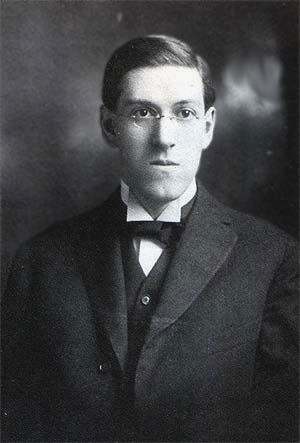
H. P. Lovecraft was a horror writer in the early 20th century, a Rhode Islander by breeding and an 18th-century English country squire by temperament. He wrote some very terrifying stuff, and worked the gamut of scary from monsters-in-the-dark to humanity's-cosmic-insignificance. Virtually unknown as a writer at the time of his death in 1937, his popularity has grown steadily since, so that today nearly everyone who considers herself a reader has at least heard of him. Even if you're not so well-read, odds are that his work has influenced multiple pieces of entertainment that you enjoy. Although he was most famous for his works that created the Cthulhu mythos, they numbered very few in comparison to the larger part of his writing. He perceived himself as carrying on the literary tradition of Edgar Allan Poe, and he nursed a lifelong penchant for the weird into his sorrowfully early grave.
I have read many (certainly not most) of his works, and they always struck a chord in me. Traditionally "scary" books and movies don't do much to frighten me; how can you be surprised when you know surprises are coming? But Lovecraft has a defter touch, and his writing instills you with horror not with the terror inherent in its subject matter, but with the awful truths he forces you to recognize and grapple with. "Boo" can be scary. A bloodless corpse can be scarier. But Lovecraft plays the instrument of human fear like a master, and brings us face-to-face with existential terrors too awful to contemplate.
But I could gush over his fiction all day. That's not what this is about. I hoped to use Lovecraft as a character in a story I was working on, and to that end, I decided to explore his psyche through the greatest insight into his mind he provided us -- thousands of letters to his close friends and family, thoughfully preserved by those lucky individuals. Lovecraft himself kept none of the letters he received; he treated postal correspondence as though it were as flighty as words spoken into the air.
I got my hands on the Selected Letters, painstakingly gathered and edited by August Derleth and James Turner, and happily began reading them. Before long, however, I realized that Lovecraft and I shared an especial connection. At times, it seemed as though his thoughts were reaching over the decades to connect with mine. Other times, I was simply disgusted by some of his views on the world; how lucky I am to look back with a modern perspective! But even then, I understood where he was coming from, even if I disagreed. A very rational man, that Lovecraft. Disturbingly so.
I've given up on that story, but no matter; I'm still fully committed to finishing his letters. Enough of his life and thoughts track mine that I have virtually no choice in the matter, if only to gain some clues into my own future . Which is not to say that I think we're fated to go down the same path -- I just feel that coincidence has put a similar mind into a similar set of circumstances, and I would be foolish not to learn from his example.
Also, I truly feel that Lovecraft's writing expresses to perfection many of my own thoughts on life, truth, meaning, virtue, and happiness. Rather than go through the onerous process of paraphrasing, I figured I'd just serve up his thoughts to you directly. So you may feel free to click below for my own choice excerpts:
Scott's Selections from Selected Letters of Lovecraft, 1911-1924
I have only just finished the first volume. There are four of these left to go. Once I've perused them, I hope to provide similar sets of excerpts with my favored letters chosen. Note that I have given a title to each letter, visible under the bookmarks section, referencing the letter's meaning or the part of it that most moved me. I've also drawn a circle around the numbers and addressees of the letters I actually mean for you to read (as some have been inadvertently included as a factor of the scanning process.)
A final note: Lovecraft was a horrible racist. His racialist attitudes, at least as of 1924, place him more closely in line with Hitler than American-style racism. He's more than a white supremacist; he's an Aryan supremacist, although I don't think that term had come into common use by 1924. Obviously I disagree universally with all of his views concerning race. But there is value, too, in seeing how an otherwise brilliant, sympathetic, kindly soul can be so blighted with hatred and contempt by a poor education. We should all give thanks for the suffering endured by our forebears, that we might live in a slightly more enlightened time.
I recently set about reading a collection of selected letters from Lovecraft's correspondence. It has had a tremendous effect on me. I hope to shed some light on that here.
H. P. Lovecraft was a horror writer in the early 20th century, a Rhode Islander by breeding and an 18th-century English country squire by temperament. He wrote some very terrifying stuff, and worked the gamut of scary from monsters-in-the-dark to humanity's-cosmic-insignificance. Virtually unknown as a writer at the time of his death in 1937, his popularity has grown steadily since, so that today nearly everyone who considers herself a reader has at least heard of him. Even if you're not so well-read, odds are that his work has influenced multiple pieces of entertainment that you enjoy. Although he was most famous for his works that created the Cthulhu mythos, they numbered very few in comparison to the larger part of his writing. He perceived himself as carrying on the literary tradition of Edgar Allan Poe, and he nursed a lifelong penchant for the weird into his sorrowfully early grave.
I have read many (certainly not most) of his works, and they always struck a chord in me. Traditionally "scary" books and movies don't do much to frighten me; how can you be surprised when you know surprises are coming? But Lovecraft has a defter touch, and his writing instills you with horror not with the terror inherent in its subject matter, but with the awful truths he forces you to recognize and grapple with. "Boo" can be scary. A bloodless corpse can be scarier. But Lovecraft plays the instrument of human fear like a master, and brings us face-to-face with existential terrors too awful to contemplate.
But I could gush over his fiction all day. That's not what this is about. I hoped to use Lovecraft as a character in a story I was working on, and to that end, I decided to explore his psyche through the greatest insight into his mind he provided us -- thousands of letters to his close friends and family, thoughfully preserved by those lucky individuals. Lovecraft himself kept none of the letters he received; he treated postal correspondence as though it were as flighty as words spoken into the air.
I got my hands on the Selected Letters, painstakingly gathered and edited by August Derleth and James Turner, and happily began reading them. Before long, however, I realized that Lovecraft and I shared an especial connection. At times, it seemed as though his thoughts were reaching over the decades to connect with mine. Other times, I was simply disgusted by some of his views on the world; how lucky I am to look back with a modern perspective! But even then, I understood where he was coming from, even if I disagreed. A very rational man, that Lovecraft. Disturbingly so.
I've given up on that story, but no matter; I'm still fully committed to finishing his letters. Enough of his life and thoughts track mine that I have virtually no choice in the matter, if only to gain some clues into my own future . Which is not to say that I think we're fated to go down the same path -- I just feel that coincidence has put a similar mind into a similar set of circumstances, and I would be foolish not to learn from his example.
Also, I truly feel that Lovecraft's writing expresses to perfection many of my own thoughts on life, truth, meaning, virtue, and happiness. Rather than go through the onerous process of paraphrasing, I figured I'd just serve up his thoughts to you directly. So you may feel free to click below for my own choice excerpts:
Scott's Selections from Selected Letters of Lovecraft, 1911-1924
I have only just finished the first volume. There are four of these left to go. Once I've perused them, I hope to provide similar sets of excerpts with my favored letters chosen. Note that I have given a title to each letter, visible under the bookmarks section, referencing the letter's meaning or the part of it that most moved me. I've also drawn a circle around the numbers and addressees of the letters I actually mean for you to read (as some have been inadvertently included as a factor of the scanning process.)
A final note: Lovecraft was a horrible racist. His racialist attitudes, at least as of 1924, place him more closely in line with Hitler than American-style racism. He's more than a white supremacist; he's an Aryan supremacist, although I don't think that term had come into common use by 1924. Obviously I disagree universally with all of his views concerning race. But there is value, too, in seeing how an otherwise brilliant, sympathetic, kindly soul can be so blighted with hatred and contempt by a poor education. We should all give thanks for the suffering endured by our forebears, that we might live in a slightly more enlightened time.
Sunday, September 7, 2014
a heart, a heart, my kingdom for a heart
2002 was an interesting year. The first part of it, I spent as a high school sophomore. I began to focus on the crush that would one day blossom into my exquisite marriage. I took my first grim steps in the shoes of an advocate as part of my in-class mock trial for the children in Lord of the Flies. I went to Disney World with my family. This last may be the dominating factor in my lingering love of the subject of this blog post:
Kingdom Hearts, if you're streets behind, is a video game series created by the Square Enix corporation featuring characters from Final Fantasy games and, much more importantly, Disney movies. That means you get to go on adventures with Winnie the Pooh, Alice, Aladdin, Ariel, Tarzan, Donald, Goofy, Jack Skellington, Pinocchio, Peter Pan, and Mickey. Better yet, you do battle with such nefarious fiends as Maleficent, The Queen of Hearts, Hades, Captain Hook, and Ursula! It's all dreadfully exciting, and fully rendered in pretty 3D graphics that somehow retain the character and feel of the original animation:
I paid close attention to the development of this game, and decided to purchase it as soon as I was able. Unfortunately for me, I had no money when the game came out; I took my first job as a cashier at Target five months after the game's release! Be assured that my first paycheck went straight to procuring a PlayStation 2 and this very game.
And oh, what a wonder it turned out to be. You play as Sora, a character created originally for the series, who loses his home and friends in a cataclysmic event where strange monsters appear and attack everyone. Cast adrift in a sea of unknown worlds and chosen for no discernible reason by a mysterious sword known as a Keyblade, Sora eventually meets up with Donald and Goofy, who are themselves on a quest to uncover the whereabouts of Mickey, who vanished while researching the very creatures that attacked Sora's home! Hoping that Donald and Goofy can help him find his friends, Sora joins up with them and together they journey to all sorts of magical places!
In all of these locales, they come across the same strange creatures, the Heartless. Most of the Heartless look like this:
But some present themselves like this:
They run around attacking people, but they don't kill them...oh no. Instead, they devour the hearts of entire worlds, transforming their entire populations into Heartless like themselves, like a magical Von Neumann machine. And, as the chosen Wielder of the Keyblade, the responsibility for holding back these foul creatures fell entirely on your shoulders! A weighty burden.
The game held deeper levels of fascination than the opportunity to visit these fully realized worlds and cavort with their animated inhabitants, however. There was an entire subsurface metaphysical discussion of the nature of the "heart" to be found, lurking subtly in diary pages left behind by a brilliant scientist of the soul. He was primarily concerned with the "True Essence" of the heart. To what extent does Darkness dictate our thoughts, feelings, and actions? Does every heart contain within it the capacity for Darkness, or is that only introduced from without? And can Darkness truly corrupt a heart to the point of no return, or is there always some redemption available for those with the will to fight for it? What is the heart, and how is it connected to, and how is it separate from, the body? Is anyone entirely good or bad?
His questions strike at the core of issues that philosophers have contemplated for millennia, but he comes nowhere near an answer. No, the answer is left to be provided by the player, who must brood endlessly over this melancholy topic. Even now, the title music plays endlessly in my heart, enchanting me with its simple but enduring melody...
I would leave the title screen on for hours while I did my homework, or just sat and thought about the people in my life, and my relation to them; primarily, how strongly I wished that I could fight for them as easily as swinging a blade into an evil villain. Oh, if only that were all it took to bring happiness to the people I care about!
Some final images that are forever seared into my mind....
A friendly challenge, a rival you like and respect, your closest friend getting lost on his way...
A cautious smile, an earnest promise, an alliance of convenience that grows into true friendship...
A vision of hope, a crystalline shard of the future, worlds uniting for the sake of everything...
The glimmering blade of a hero, an eternal lock opened, a sage at last set free...
A lost love seen everywhere, a tearful reunion, a memory cherished into diamond...
A song, a light, and a smile....
Belief in yourself, the greatest of risks, and the burst of joy when you first take flight...
These are the words that speak to me of Kingdom Hearts. You may never experience it, and I'd understand why, but I hope I have brought you some small part of the meaning it holds for me. Try watching the video below, and see if you can taste some of the magic I felt when I first came to know this game.
Just don't walk away.
Kingdom Hearts, if you're streets behind, is a video game series created by the Square Enix corporation featuring characters from Final Fantasy games and, much more importantly, Disney movies. That means you get to go on adventures with Winnie the Pooh, Alice, Aladdin, Ariel, Tarzan, Donald, Goofy, Jack Skellington, Pinocchio, Peter Pan, and Mickey. Better yet, you do battle with such nefarious fiends as Maleficent, The Queen of Hearts, Hades, Captain Hook, and Ursula! It's all dreadfully exciting, and fully rendered in pretty 3D graphics that somehow retain the character and feel of the original animation:
I paid close attention to the development of this game, and decided to purchase it as soon as I was able. Unfortunately for me, I had no money when the game came out; I took my first job as a cashier at Target five months after the game's release! Be assured that my first paycheck went straight to procuring a PlayStation 2 and this very game.
And oh, what a wonder it turned out to be. You play as Sora, a character created originally for the series, who loses his home and friends in a cataclysmic event where strange monsters appear and attack everyone. Cast adrift in a sea of unknown worlds and chosen for no discernible reason by a mysterious sword known as a Keyblade, Sora eventually meets up with Donald and Goofy, who are themselves on a quest to uncover the whereabouts of Mickey, who vanished while researching the very creatures that attacked Sora's home! Hoping that Donald and Goofy can help him find his friends, Sora joins up with them and together they journey to all sorts of magical places!
In all of these locales, they come across the same strange creatures, the Heartless. Most of the Heartless look like this:
| Very Ghibli. And roughly the size of a breadbox. |
| Less Ghibli, more Alighieri. And roughly the size of a bread factory. |
The game held deeper levels of fascination than the opportunity to visit these fully realized worlds and cavort with their animated inhabitants, however. There was an entire subsurface metaphysical discussion of the nature of the "heart" to be found, lurking subtly in diary pages left behind by a brilliant scientist of the soul. He was primarily concerned with the "True Essence" of the heart. To what extent does Darkness dictate our thoughts, feelings, and actions? Does every heart contain within it the capacity for Darkness, or is that only introduced from without? And can Darkness truly corrupt a heart to the point of no return, or is there always some redemption available for those with the will to fight for it? What is the heart, and how is it connected to, and how is it separate from, the body? Is anyone entirely good or bad?
His questions strike at the core of issues that philosophers have contemplated for millennia, but he comes nowhere near an answer. No, the answer is left to be provided by the player, who must brood endlessly over this melancholy topic. Even now, the title music plays endlessly in my heart, enchanting me with its simple but enduring melody...
I would leave the title screen on for hours while I did my homework, or just sat and thought about the people in my life, and my relation to them; primarily, how strongly I wished that I could fight for them as easily as swinging a blade into an evil villain. Oh, if only that were all it took to bring happiness to the people I care about!
Some final images that are forever seared into my mind....
A friendly challenge, a rival you like and respect, your closest friend getting lost on his way...
A cautious smile, an earnest promise, an alliance of convenience that grows into true friendship...
A vision of hope, a crystalline shard of the future, worlds uniting for the sake of everything...
The glimmering blade of a hero, an eternal lock opened, a sage at last set free...
A lost love seen everywhere, a tearful reunion, a memory cherished into diamond...
A song, a light, and a smile....
Belief in yourself, the greatest of risks, and the burst of joy when you first take flight...
These are the words that speak to me of Kingdom Hearts. You may never experience it, and I'd understand why, but I hope I have brought you some small part of the meaning it holds for me. Try watching the video below, and see if you can taste some of the magic I felt when I first came to know this game.
Just don't walk away.
Saturday, September 6, 2014
bad dreams
I don't want to figure prominently in your mythology. I'd prefer to be a bit player, nothing more than an aside, a footnote in your personal history. This goes for everyone, and it isn't an attempt to minimize myself or my influence in the lives of others. Of course I want to be influential! But when we consider our own life stories, they should come forth as a record of the amazing things we've done, the great decisions we've made, the tentative perfections we achieved. They shouldn't be a list of other people. There is no life to be had caroming from one other to another.
I can't tell if distance from my own written works tends to make me more or less objective. I went back and read many of my daily blog posts from last September, and I was terribly impressed by what I saw. Things that (at the time) seemed like petty and desperate attempts to draw forth meaning and emotional impact from the most paltry of sources now come across (to me) like well-structured essays that expertly uncover beauty and tragedy in the midst of life's most mundane elements. Something about that thought makes me angry, both at our natural inability to accurately judge ourselves, and at my failure (so far) to capitalize on my perceived talents more fully. Ah, well. All things in time.
What do you want your life story to be? One antidote to the mundanities of daily life is to pursue a life that isn't so mundane, one full of novelty and adventure. These lives are difficult and dangerous, but they're out there. It's all a matter of settling on your priorities. I'm writing this blog post, right? It's a step on the road towards my dreams. What's the last thing you did to move yourself in that direction?
Be careful, though. Not all dreams are to the good. Dwell on yours, and the costs, long before you fully commit yourself. Do not become an AHAB. Avoid the crooked paths! Never let yourself become so wrongly convicted as to place the one above the others in the celestial constellations of your fate. Mythological figures can be both good and bad, and you are the only one who will ever fully exist in your life. Take care not to drown in a pool of your own remembered vanities. And remember, above all, that NARCISSUS' was not so much a fable about self-regard as it was a warning against devoting oneself too fully to the appreciation of beauty. You might stand transfixed by the awesome sights before you, and then you will be tempted to give yourself fully to them. But there are mightier, worthier things to serve with your attention than your own senses. Remember to take time not to feel, or you risk losing everything.
I can't tell if distance from my own written works tends to make me more or less objective. I went back and read many of my daily blog posts from last September, and I was terribly impressed by what I saw. Things that (at the time) seemed like petty and desperate attempts to draw forth meaning and emotional impact from the most paltry of sources now come across (to me) like well-structured essays that expertly uncover beauty and tragedy in the midst of life's most mundane elements. Something about that thought makes me angry, both at our natural inability to accurately judge ourselves, and at my failure (so far) to capitalize on my perceived talents more fully. Ah, well. All things in time.
What do you want your life story to be? One antidote to the mundanities of daily life is to pursue a life that isn't so mundane, one full of novelty and adventure. These lives are difficult and dangerous, but they're out there. It's all a matter of settling on your priorities. I'm writing this blog post, right? It's a step on the road towards my dreams. What's the last thing you did to move yourself in that direction?
Be careful, though. Not all dreams are to the good. Dwell on yours, and the costs, long before you fully commit yourself. Do not become an AHAB. Avoid the crooked paths! Never let yourself become so wrongly convicted as to place the one above the others in the celestial constellations of your fate. Mythological figures can be both good and bad, and you are the only one who will ever fully exist in your life. Take care not to drown in a pool of your own remembered vanities. And remember, above all, that NARCISSUS' was not so much a fable about self-regard as it was a warning against devoting oneself too fully to the appreciation of beauty. You might stand transfixed by the awesome sights before you, and then you will be tempted to give yourself fully to them. But there are mightier, worthier things to serve with your attention than your own senses. Remember to take time not to feel, or you risk losing everything.
Friday, September 5, 2014
a look into flame
I overslept this morning, and I feel great. Maybe there's something to this sleep thing...some connection between my mood and whether I'm suffering a somnial deficiency. Could it be? But then, what would become of my artistic side...are not the best of artists fueled by pain, misery, and a certain moody nature?
But no, peoples' natures are not something so fungible as that; I absolutely reject the principle behind allowing my physical circumstances such great influence on my mental state. It doesn't matter if there are brain chemicals that are altering my mood if I consciously recognize and react to counter it.
What is the self, is what I'm getting at. The sum of your moods and memories and all of it, which do you identify with? Can I even make a difference by trying to squeeze out a single part -- the physical -- or am I doomed to failure? Oh, Mark Twain, you knew everything! Perhaps it was the cosmic cut of his life, so bound to the movement of the comets, that set his mind in such a naturally beneficial arrangement as to give him insight into the true form of existence. He might stare for long hours into a flame, and see a hurricane within. Could you do the same?
There is a short story by Roald Dahl which I read long ago and only very recently reread, known as "The Wonderful Story of Henry Sugar". That link contains multiple stories, and all are well and good, but only Henry Sugar himself has stuck with me through the years.
The story concerns a fellow who is essentially a trust-fund baby in his late twenties, who spends all his time having fun with his similarly situated friends. He enjoys partying, drinking, relaxing, and, above all, gambling. For Dahl states that the chief concern of these adult rich kids is the growth of their wealth, for their great fortunes correspond to great fears that they might awaken one day to find the bank account empty.
Dahl isn't especially unkind to these; he sees them as having had the meaning stripped from their lives by fate, and if they enjoy themselves, then they enjoy themselves. At least they aren't hurting anyone. But in this story, he gives one a chance to redeem his pointless life.
Henry Sugar, through a twist of fate, comes across an old account written by a doctor, an interview with an Indian mystic who was able to see with his inner eye. The mystic describes the training regimen he followed to develop this ability, including staring into the flame of a candle for hours every day, as well as reading cards from the reverse side. This last especially catches the attention of the gambler Henry Sugar, and he immediately sets out to develop the abilities using the training scheme described in the tale.
Henry locks himself away from the world in absolute pursuit of these magical powers. For years he does nothing but train laboriously, forcing himself to stare into flames and focus on cards for twelve hours or more each day. He loses all of his friends and his former party lifestyle fades to a distant memory, but slowly, he comes to be able to see with his eyes closed, and then to see behind things with his eyes open. And once he has developed the power to read cards, he focuses only on training that, and improves his time to visualization from four minutes to four seconds over the course of several more years.
When he has finally reached a point where he feels truly ready to bilk the casinos for all they're worth, he immediately stops his training and heads straight there. He finds, over the course of a short evening, that he is easily able to focus and predict the outcome of every last one of the casino's games, to the point that winning is almost too easy. He wisely avoids winning too much, and takes away a relatively small amount of money, but he comes away from it convinced that he could easily make millions every night.
He goes for a walk, and muses on the fact that something in him has changed. The other guests at the casino, whom he used to see as his fellows and compatriots, he finds he can no longer relate to at all. His old self would have been driven, after such a successful night on the town, to go out and celebrate with champagne. It occurs to him that, in the course of single-mindedly pursuing these powers that would allow him to make all the money in the world, he has lost his great desire for making money.
That was the part of the story that stuck with me the most. It may be that you dedicate yourself and achieve something great, only to find that the journey has left you with no desire for your initial object. While this theme is usually used to a tragic end, Dahl gives it a more positive spin, by filling Henry with the desire to use his money to a good end. He spends the rest of his life traveling the world, bilking casinos all over, and using the money to open world-class orphanages in as many countries as he can.
It's well worth a read. It's not one of the works Dahl is most famous for, and I only found it because of my tendency to obsessively seek out all the product created by my favorite artists. But I am glad that I did, because unlike so many of his other creations, The Wonderful Story of Henry Sugar is a true story.
But no, peoples' natures are not something so fungible as that; I absolutely reject the principle behind allowing my physical circumstances such great influence on my mental state. It doesn't matter if there are brain chemicals that are altering my mood if I consciously recognize and react to counter it.
What is the self, is what I'm getting at. The sum of your moods and memories and all of it, which do you identify with? Can I even make a difference by trying to squeeze out a single part -- the physical -- or am I doomed to failure? Oh, Mark Twain, you knew everything! Perhaps it was the cosmic cut of his life, so bound to the movement of the comets, that set his mind in such a naturally beneficial arrangement as to give him insight into the true form of existence. He might stare for long hours into a flame, and see a hurricane within. Could you do the same?
There is a short story by Roald Dahl which I read long ago and only very recently reread, known as "The Wonderful Story of Henry Sugar". That link contains multiple stories, and all are well and good, but only Henry Sugar himself has stuck with me through the years.
The story concerns a fellow who is essentially a trust-fund baby in his late twenties, who spends all his time having fun with his similarly situated friends. He enjoys partying, drinking, relaxing, and, above all, gambling. For Dahl states that the chief concern of these adult rich kids is the growth of their wealth, for their great fortunes correspond to great fears that they might awaken one day to find the bank account empty.
Dahl isn't especially unkind to these; he sees them as having had the meaning stripped from their lives by fate, and if they enjoy themselves, then they enjoy themselves. At least they aren't hurting anyone. But in this story, he gives one a chance to redeem his pointless life.
Henry Sugar, through a twist of fate, comes across an old account written by a doctor, an interview with an Indian mystic who was able to see with his inner eye. The mystic describes the training regimen he followed to develop this ability, including staring into the flame of a candle for hours every day, as well as reading cards from the reverse side. This last especially catches the attention of the gambler Henry Sugar, and he immediately sets out to develop the abilities using the training scheme described in the tale.
Henry locks himself away from the world in absolute pursuit of these magical powers. For years he does nothing but train laboriously, forcing himself to stare into flames and focus on cards for twelve hours or more each day. He loses all of his friends and his former party lifestyle fades to a distant memory, but slowly, he comes to be able to see with his eyes closed, and then to see behind things with his eyes open. And once he has developed the power to read cards, he focuses only on training that, and improves his time to visualization from four minutes to four seconds over the course of several more years.
When he has finally reached a point where he feels truly ready to bilk the casinos for all they're worth, he immediately stops his training and heads straight there. He finds, over the course of a short evening, that he is easily able to focus and predict the outcome of every last one of the casino's games, to the point that winning is almost too easy. He wisely avoids winning too much, and takes away a relatively small amount of money, but he comes away from it convinced that he could easily make millions every night.
He goes for a walk, and muses on the fact that something in him has changed. The other guests at the casino, whom he used to see as his fellows and compatriots, he finds he can no longer relate to at all. His old self would have been driven, after such a successful night on the town, to go out and celebrate with champagne. It occurs to him that, in the course of single-mindedly pursuing these powers that would allow him to make all the money in the world, he has lost his great desire for making money.
That was the part of the story that stuck with me the most. It may be that you dedicate yourself and achieve something great, only to find that the journey has left you with no desire for your initial object. While this theme is usually used to a tragic end, Dahl gives it a more positive spin, by filling Henry with the desire to use his money to a good end. He spends the rest of his life traveling the world, bilking casinos all over, and using the money to open world-class orphanages in as many countries as he can.
It's well worth a read. It's not one of the works Dahl is most famous for, and I only found it because of my tendency to obsessively seek out all the product created by my favorite artists. But I am glad that I did, because unlike so many of his other creations, The Wonderful Story of Henry Sugar is a true story.
Thursday, September 4, 2014
aut vincere aut mori
I was invited to a fantasy football league at work! I don't really understand this "football" thing, and the fantasy element was completely alien to me, but I was able to name my team and choose a cool logo!
I present to you:
I present to you:
THE NEW SCOTT RODEO
This team of misfits is rarin' to go! I am pretty sure we are going to score some touchdowns, and maybe a safety or two!
Actually, I'm not a complete ignoramus when it comes to the vicissitudes of that most American of Sports; my friends endeavored gaily to indoctrinate me into the ways of the gridiron last year, and though they mostly failed utterly, I came out of it with a minor understanding of the rules, ways, and means of passing a little oblong ball up and down a grassy plain.
I've got some players, some lines, some measuring tape, and a few guys in convict's outfits I rented from Halloween Adventure. I am ready to GET THIS GAME UNDERWAY.
After letting the website do most of the drafting for me, because I Do Not Understand That Stuff, I set my sights on trying to figure out what I need to do to win this fantasy football thing. Lo and behold, the crux of the matter is determining which teams get more "points," which are granted for special "plays" performed by specific "players" which have been "drafted" to that team. Regardless of actual earthly team allegiance, a player's individual performance (or, maddeningly, a whole team's defensive performance) is the sole measure by which each fantasy team of diversely sourced athletes derives its success or failure. Specific plays are granted a certain number of points per position based on a variety of factors including yardage and...I don't know. Probably something else, something very football-y. Sacks must figure prominently in there somewhere. Burlap sacks.
With resin.
As I stared at pages and pages of tables, at millions of productive man-hours being poured down a bottomless funnel of fake football, the charts and numbers began to swirl together, and it transformed from a heroic battle of armored warriors into...a bunch of imaginary numbers being calculated over and over again, and forming a pretend outcome. It was like...well. I'll let the charts do the talking.
Can you tell which of the above is from fantasy football, and which is from Dungeons & Dragons? Now, friends, I play Dungeons & Dragons (or games like it) on a weekly basis; I possess a Star Wars lunch bag; I have been known to attend the Renaissance Faire twice in one season. I, in fact, consider myself a literal scholar of the "A Song of Ice and Fire" series by George R. R. Martin. Despite all this, I can state with confidence that I have never encountered anything nearly as nerdy as fantasy football and the statistical machinations and analyses that go into its planning and execution. If I weren't a more tolerant and understanding person, pleased to permit each individual to enjoy whatsoever pastime he chooses, I would be utterly embarrassed for the people who actually look forward to this.
It's true that there isn't anything special or appealing to me about football, fantasy or otherwise. But I know that people take such great joy in it -- and, knowing that, it's something that I should endeavor to appreciate, as well. Else how shall I ever claim to understand the swell and throng of humanity, were I not to taste of the same fruits they have? We are only ever above those who think themselves our betters, and the same goes for everyone. Enjoy yourselves!
Subscribe to:
Posts (Atom)